

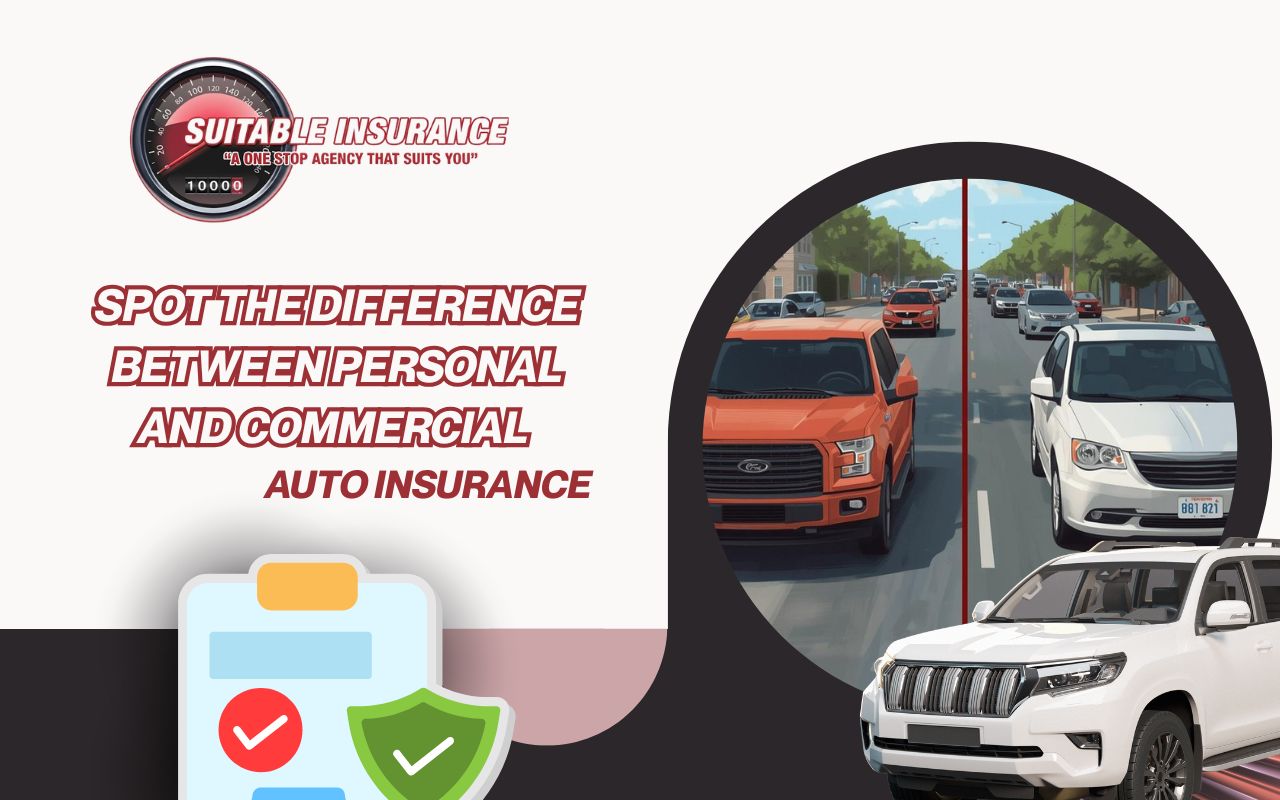
Spot The Difference Between Personal And Commercial Auto Insurance
The difference between personal and commercial auto insurance matters when you drive for daily life and for work. At Suitable Insurance Services, we want you to know where coverage starts, where it stops, and how the right plan can protect your money.
Many drivers use one car for errands, meetings, or deliveries. Because of that, the difference between personal and commercial auto insurance can affect claims, legal duties, and repair costs. Our company help you look at use, risk, and policy needs with confidence.
Assess What Personal Policies Usually Cover Each Day
Personal auto insurance is made for normal driving, such as commuting, shopping, school runs, and family trips. It often includes liability, collision, comprehensive, and uninsured motorist protection. At Suitable Insurance Services, we help drivers match these choices to real daily needs.
Liability coverage can pay for injuries or damage you cause.
Collision coverage can help repair your car after a crash.
Comprehensive coverage can help with theft, weather, or vandalism.
Uninsured motorist coverage can help when another driver lacks enough insurance.
Even so, personal plans often come with lower coverage limits. If your risk grows because of work use, those limits may not be enough. That is one key part of the difference between personal and commercial auto insurance.
Notice When Business Driving Creates Risky Coverage Gaps
A personal plan may fall short when you drive for deliveries, job sites, client visits, or paid services. Simple commuting to work is usually fine, but regular business tasks can change how an insurer views your car.
If you use a business use vehicle often, a claim may be denied because the trip was work related. Our company see this issue often, so we encourage drivers to check policy language before a loss happens.
Discover How Commercial Policies Protect Work Vehicles Better
A commercial policy is built for business driving. It can protect company cars, vans, trucks, and other vehicles used to move tools, goods, or people. We can help you review whether your driving pattern calls for this stronger option.
In many cases, a commercial policy offers broader terms, more driver flexibility, and higher limits. That matters when your vehicle supports income, serves customers, or carries equipment that adds more risk on the road.
Contrast Which Drivers and Vehicles Need Broader Coverage
Commercial plans can fit more than one type of driver or vehicle. This matters when employees, rented autos, or larger work units are part of daily operations. A commercial policy can also support a work vehicle insurance need that a personal plan does not meet well.
Employees who drive for company tasks may need listed business coverage.
Vans and light trucks often need protection that matches cargo risk.
Leased or hired autos may need added policy wording.
Trailers or service units may need separate coverage details.
These points show the difference between personal and commercial auto insurance in a practical way. The more your vehicle supports work, the more important proper coverage becomes.
Comprehend Why Coverage Limits Affect Business Risk More
Coverage limits shape how much protection you have after a serious crash. Personal policies often work for private driving, but business use can raise the chance of larger claims, legal costs, and property damage.
That is why the difference between personal and commercial auto insurance often comes down to exposure. At Suitable Insurance Services, we can help you compare coverage limits, review lawsuit risk, and see when a higher limit makes better sense for your budget and goals.
Could Your Car Need a Commercial Policy Now
You may need a commercial policy sooner than you think. The answer depends on how often you drive for income, what you carry, who drives, and whether the car supports your daily work in a clear way.
Do you deliver products or supplies for pay?
Do you visit job sites throughout the week?
Do employees use the car for company tasks?
Do you carry tools, goods, or clients often?
If you said yes to any of these, the difference between personal and commercial auto insurance deserves a close review. Our company can help you sort out that choice before a claim exposes a gap.
Frequently Asked Questions
What is the main difference between personal and business auto coverage?
The main difference is how the vehicle is used. Personal coverage is for normal private driving, while business coverage is for work-related tasks that create more risk and often need higher protection.
Can I use a personal policy for a business use vehicle?
Sometimes a personal policy may allow limited work use, but many business tasks are excluded. When a business use vehicle supports deliveries, client trips, or paid services, broader coverage is often the safer choice.
Why do coverage limits matter so much for work driving?
Work driving can lead to larger claims because it may involve more miles, more drivers, more equipment, or more public contact. Higher coverage limits can help protect income, property, and future business plans.
Does a commercial policy cover employees who drive?
Many commercial plans can cover employees, but the details depend on the policy. It is important to list drivers correctly and review how the business uses each vehicle before relying on coverage.
How can I choose the right work vehicle insurance?
Start with how the car is used each week. Then compare limits, drivers, vehicle type, and cargo needs. Suitable Insurance Services can guide you through the difference between personal and commercial auto insurance and help you choose fit-for-purpose work vehicle insurance.
Choose Coverage That Keeps Your Driving Plans Protected
The right plan depends on how you drive today and how you may drive tomorrow. At Suitable Insurance Services, we believe clear advice helps you avoid surprises, protect your finances, and keep moving with less stress.
When you understand the difference between personal and commercial auto insurance, it becomes easier to choose the right commercial policy, set useful coverage limits, and protect every business use vehicle with care.